
Quick Answer: Parasite SEO is publishing content on a high-authority third-party site so it ranks faster than it would on your own domain. It works because Google presumes new pages match the quality of their domain, but Google’s site reputation policy targets third-party content placed mainly to exploit a host’s ranking signals. Integrated, authored contributions carry little risk; paid, unauthored placements built to rank carry a lot.
Most parasite SEO guides either sell the tactic or condemn it. Neither helps someone deciding whether a third-party publishing campaign is worth the budget, brand risk, and legal exposure.
The rules have also changed. Google rewrote its site reputation policy in November 2024, the European Commission opened an investigation in November 2025, and in August 2026 Google split enforcement by geography and published the factors its reviewers use. Guides quoting the 2024 policy describe a rulebook that no longer exists.
We’re the LYNX SEO team. Clients in cannabis, cybersecurity, ecommerce, and other ad-restricted verticals ask us about parasite SEO regularly, usually after a competitor’s sponsored page outranks them. This guide is our answer: how it works, what the current policy says, how platforms compare on risk, a compliant framework, the math on whether it’s worth it, and the alternatives that compound.
Key Takeaways
- Parasite SEO works because Google’s own documentation says it generally presumes individual pages, including new pages, match the overall quality of other pages on the same domain.
- Google’s site reputation policy applies when third-party content is published on a host mainly because of the host’s established ranking signals, and having third-party content alone does not violate it.
- Since August 30, 2026, site reputation manual actions affect search results shown outside the European Economic Area, while inside the EEA violating pages are categorized as separate from the main domain and ranked on their own merits.
- Google’s human reviewers now assess four published factors: how the content is presented, its quality relative to the host, its stated authorship, and whether the same content appears on other sites.
- Links in paid placements must carry rel=”sponsored” or rel=”nofollow” under Google’s link spam policy, which means a compliant sponsored post passes no ranking credit to the sponsor’s site.
- The FTC’s native advertising guidance says advertisers should make sure organic search listings for a native ad don’t imply it is anything other than an ad.
What Is Parasite SEO? Parasite SEO Meaning Explained
Parasite SEO is a strategy where content is published on an established, high-authority website (the “host”) instead of the operator’s own site, so the content can rank for competitive keywords faster than a newer or weaker domain could manage. The host might be a news site, a magazine, an industry blog, or a platform that allows user publishing, such as LinkedIn, Medium, Reddit, or Quora.
The name comes from the relationship: the content feeds on the host’s accumulated authority. That framing is a little unfair to a lot of legitimate practice, which is why the term covers such a wide range of activity.
Parasite SEO vs Barnacle SEO vs Third-Party Publishing
Three terms get used almost interchangeably, and it helps to separate them.
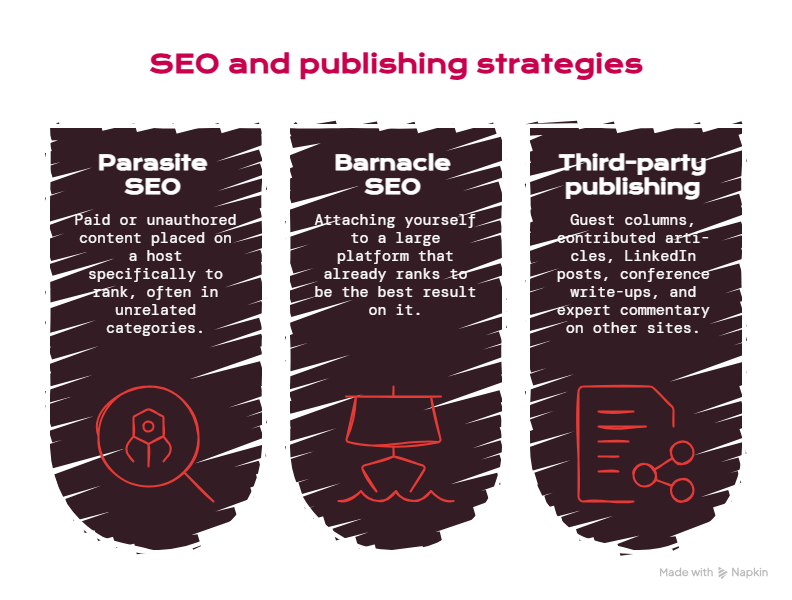
- Parasite SEO usually refers to the aggressive end: paid or unauthored content placed on a host specifically to rank, often in categories unrelated to the host’s own content.
- Barnacle SEO usually refers to attaching yourself to a large platform that already ranks, such as a business profile on a review platform, a listing on a booking site, or a presence in a directory that dominates local results. The platform ranks; you make sure you’re the best result on it.
- Third-party publishing is the neutral umbrella: guest columns, contributed articles, LinkedIn posts, conference write-ups, and expert commentary on someone else’s site.
The distinction that actually matters for risk isn’t the label. It’s whether the content exists on the host because the host’s audience benefits from it, or because the host’s ranking signals do.
The Parasite SEO Spectrum: From Legitimate to Abusive
The same basic action, publishing on someone else’s domain, can sit anywhere from standard digital PR to a spam policy violation. This table maps the spectrum using the criteria Google now publishes.
| Tier | Typical Example | Editorial Integration | Policy Risk |
| Earned Editorial | An expert column accepted by an industry publication’s editor | Full: authored, edited, integrated in site sections | Very low |
| Platform Publishing | A founder’s LinkedIn article or Medium post under their own name | Platform-native, user-generated by design | Low (subject to platform rules) |
| Community Participation | A genuinely useful answer in an existing Reddit or Quora thread | User-generated by design | Low if not promotional spam |
| Disclosed Partnership | A co-branded, clearly labeled deals or buying section curated with the host | Joint editorial effort, disclosed | Low to moderate, depends on integration |
| Paid Placement | A sponsored “best of” article on a news site, lightly labeled | Minimal; often off-topic for the host | High |
| Unauthored Syndication | Identical affiliate articles placed across many unrelated domains | None | Very high |
How Parasite SEO Works (and Why Parasite SEO Works at All)
Understanding the mechanism is what lets an operator predict when a placement will rank, how long it will last, and when it’s likely to fall off.
The Domain-Level Quality Presumption
The most important sentence for understanding parasite SEO comes from Google itself. In its spam policies, Google states that it generally presumes individual pages, including new pages, match the overall quality of other pages on the domain.
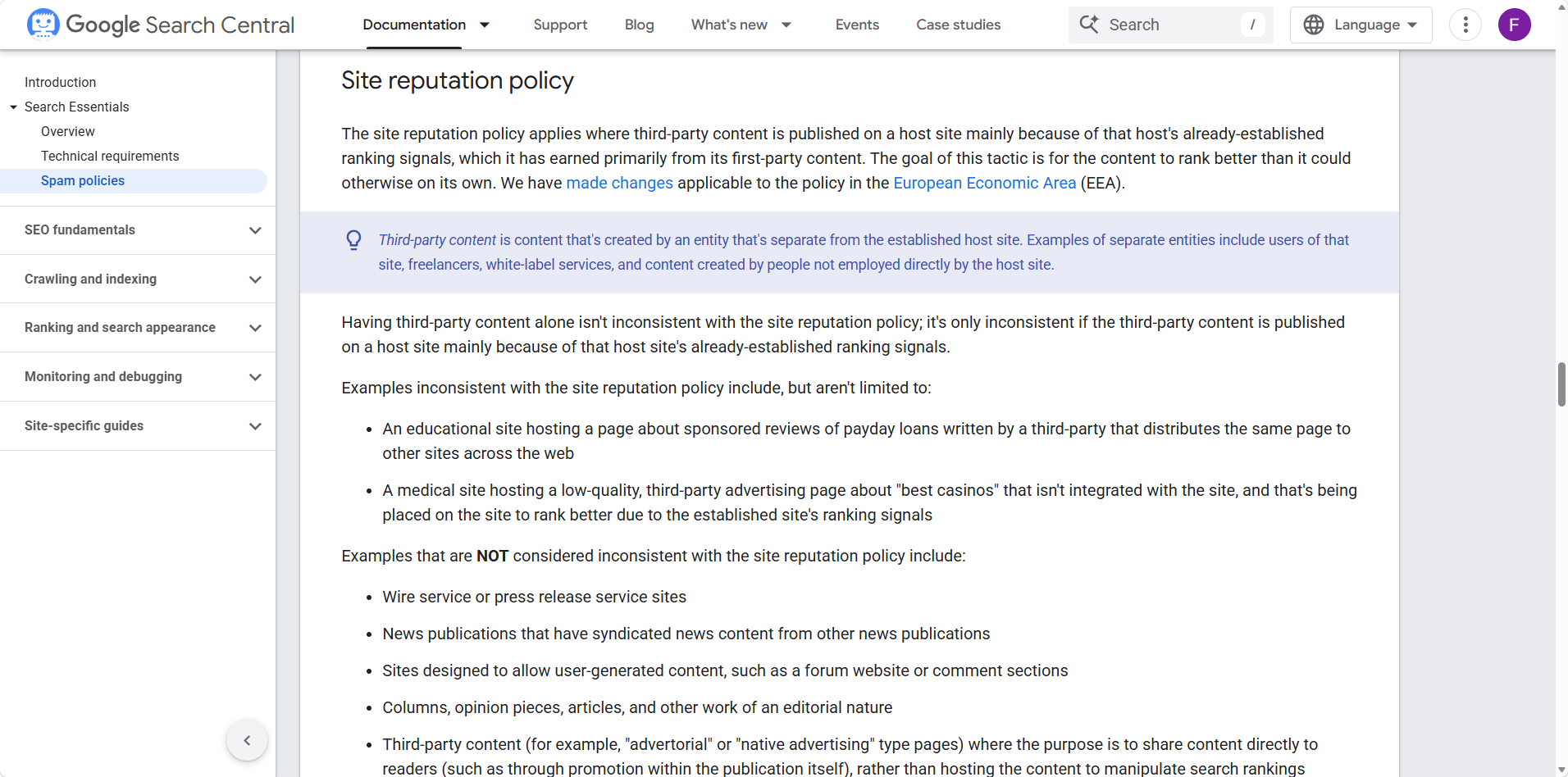
That’s the whole engine. A brand-new page on a trusted domain inherits the benefit of the doubt that the domain has earned over years, before the page has earned anything itself. A new page on a new site gets no such head start. Parasite SEO is, at its core, an attempt to borrow that presumption.
It’s also the mechanism Google uses to shut it down. When Google finds a portion of a site out of line with the policy, it can stop applying that presumption to that portion, which is exactly what the August 2026 EEA change formalizes.
Internal Links and Crawl Priority
Large publishers link heavily between their own pages. A new article on a major site typically picks up internal links from section pages, related-article modules, and menus, which pass PageRank and get the page crawled and indexed quickly. On a new site, the same article might wait weeks for its first crawl.
Topical Relevance of the Host
A host that already publishes extensively on a topic gives new pages on that topic strong contextual signals. That’s why a financial publication’s lending guide ranks more easily than the same guide on a local newspaper. It’s also why off-topic parasite content (casino reviews on a medical site, to use Google’s own example) is the easiest kind for Google to spot.
Why Parasite SEO Stops Working
Parasite placements lose rankings for three predictable reasons: Google’s systems or reviewers detect that the content isn’t integrated with the host; the host removes the content, often after a manual action or a policy change; or the host’s overall signals decline because too much of the site is third-party material. Operators who plan campaigns without accounting for all three are planning on hope.
Google Parasite SEO Policy: Site Reputation Abuse From 2024 to 2026
Google’s treatment of parasite SEO has changed more in the last two and a half years than in the decade before. Here’s the timeline most guides are missing.
| Date | Change | What It Meant for Operators |
| March 2024 | Google announces the site reputation abuse policy alongside its March 2024 core update | Third-party content placed to exploit host signals becomes an explicit spam policy target |
| May 2024 | Enforcement begins, including manual actions on major publishers | Sponsored sections on well-known domains start disappearing from results |
| November 2024 | Google clarifies that first-party involvement doesn’t change the nature of exploitative third-party content | “We edited it” or “it’s a licensing deal” stops being a defense |
| November 2025 | The European Commission opens a Digital Markets Act investigation into the policy | Publishers argue the policy restricts legitimate commercial partnerships |
| August 30, 2026 | Google splits enforcement by geography and publishes human review factors | Manual actions apply outside the EEA; inside the EEA, violating pages are ranked separately from the host |
March 2024: The Policy Is Introduced
Google announced the policy as part of its March 2024 core update and new spam policies, alongside new policies on scaled content abuse and expired domain abuse. It targeted the practice of placing third-party pages on reputable sites to take advantage of their ranking strength.
November 2024: First-Party Involvement Stops Mattering
In its November 2024 update to the site reputation abuse policy, Google said it had reviewed arrangements involving white-label services, licensing agreements, partial ownership, and other complex business setups, and concluded that a host’s degree of involvement doesn’t change the exploitative nature of third-party content placed to benefit from the host’s signals. Many sponsored sections had relied on exactly that “we’re involved” argument.
November 2025: The European Commission Investigates
The European Commission opened an investigation under the Digital Markets Act, as Reuters reported, examining whether Google’s policy unfairly demoted publishers that carry commercial partner content. For publishers, third-party content deals are a meaningful revenue line; for Google, they’re a search quality problem.
August 2026: The EEA Split and New Review Criteria
Google published an update to the site reputation policy on August 28, 2026, effective August 30. The policy page, now titled the site reputation policy, sets out two different outcomes:
- Outside the EEA: Pages found out of line with the policy may be subject to a manual action in results shown to users outside the EEA.
- Inside the EEA: Those pages may be categorized as separate from the main domain and ranked on their own merits, without the impact of a manual action. Google says previous site reputation manual actions in the EEA are being lifted.
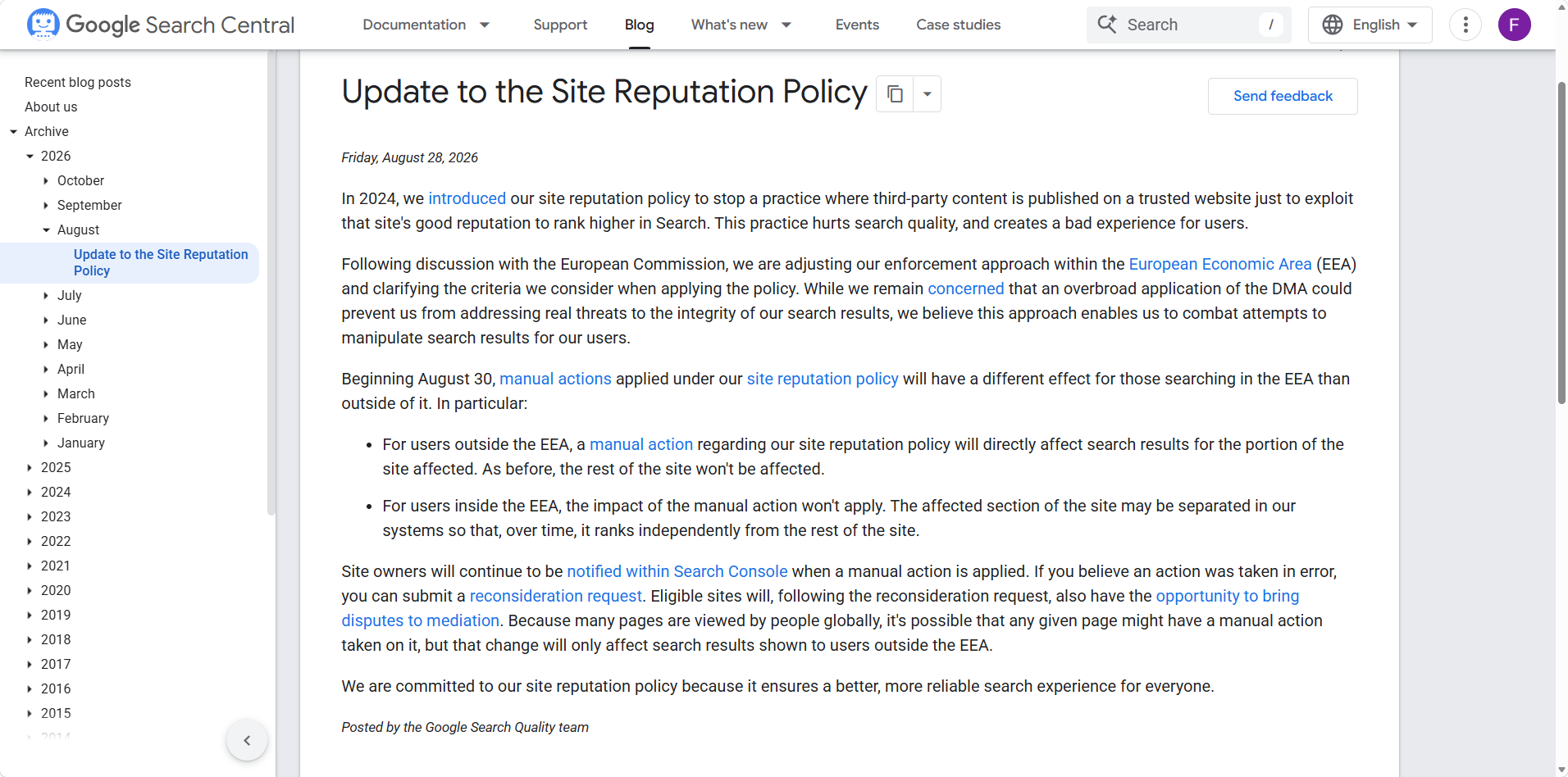
The EEA change is not an amnesty for parasite SEO. A page that loses the host’s domain-level presumption has lost the only reason it was ranking. Google also notes that over time its systems learn to rank these separated sections independently.
What the Site Reputation Policy Does NOT Cover
Google’s policy is explicit that having third-party content alone isn’t a violation. It lists several examples it does not consider inconsistent with the policy:
- Wire and Press Release Services: Sites built to distribute press releases or wire content.
- Syndicated News: News publications carrying syndicated content from other news publications.
- User-Generated Content Sites: Forums, comment sections, and other sites designed for user contributions.
- Editorial Work: Columns, opinion pieces, articles, and other work of an editorial nature.
- Native Advertising Aimed at Readers: Advertorials whose purpose is to reach the publication’s own readers rather than to manipulate rankings.
- Properly Treated Affiliate Links and Ad Units: Affiliate links that follow the link spam rules, and embedded third-party ads.
The Four Factors Google Uses in Human Review
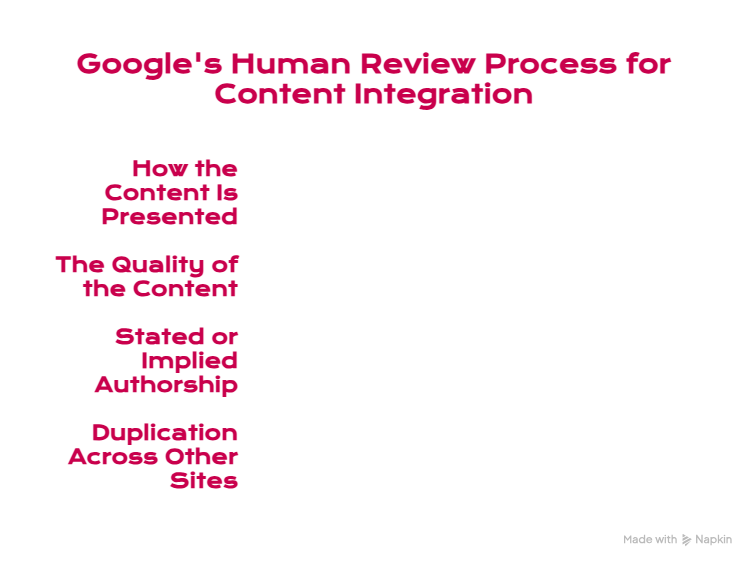
For the first time, Google has published the objective factors its reviewers weigh when deciding whether third-party content is integrated with its host. The review applies globally, and Google says no single factor is necessary or sufficient on its own.
1. How the Content Is Presented
Reviewers check whether the design, formatting, typography, and user experience match the host domain. Content that looks bolted on is a signal.
2. The Quality of the Content
Reviewers look for quality problems on the page that don’t appear elsewhere on the host, suggesting a departure from the host’s standards.
3. Stated or Implied Authorship
Reviewers ask whether someone explicitly takes ownership or responsibility for the content, and whether there’s evidence contesting the stated authorship.
4. Duplication Across Other Sites
Reviewers check whether identical or near-identical content appears on multiple other sites, the signature of syndicated parasite networks.
These four factors are the most practical guidance Google has ever published on this topic, and we use them later in this guide as a pre-publication test.
Policy Circumvention: Why Moving Subfolders Backfires
A common parasite SEO playbook after a manual action is to move the same content to a new subfolder or subdomain and start again. Google’s spam policies now name this directly: using new subdomains, subdirectories, or sites to keep violating policy counts as circumvention and can trigger broader action, including removing more sections of a site from results or restricting eligibility for certain search features. For hosts, the downside of tolerating a parasite program just got bigger.
Is Parasite SEO Black Hat? Is Parasite SEO Safe?
Parasite SEO is not inherently black hat. Publishing on another site is one of the oldest and most legitimate forms of marketing. Parasite SEO becomes a policy violation when third-party content sits on a host mainly because of the host’s ranking signals rather than its audience or editorial judgment. Whether it’s safe depends almost entirely on where your campaign sits on the spectrum above.
Parasite SEO Risks for the Operator
The operator (the brand or affiliate paying for or producing the content) faces a different set of risks from the host.
Deindexing or Demotion Without Warning
When Google takes action on a host section, every page in it can lose visibility at once. Operators aren’t notified; only the host is, through Search Console. You find out when your traffic stops.
Sunk Cost on Paid Placements
Sponsored placements on major domains are typically priced for the traffic they’re expected to deliver. If the section is demoted two months into a twelve-month payback, the loss is total.
Brand Contamination
A brand name appearing inside a low-quality “best of” roundup on an off-topic site is visible to customers, journalists, and investors. For established brands, that reputational cost often exceeds any ranking benefit.
Legal Exposure Under FTC Rules
The FTC’s native advertising guidance for businesses requires advertising to be identifiable as advertising, and it specifically says advertisers should make sure organic search listings for native ads don’t suggest the content is something other than an ad.
A sponsored “independent review” that ranks in Google without clear disclosure is exactly the scenario that guidance describes. The FTC has also said its enforcement approach extends to everyone who participates in creating or presenting native ads, including agencies and affiliate networks. (This isn’t legal advice; have counsel review any paid placement program.)
Link Value That Doesn’t Exist
Google’s link spam policy lists advertorials and native advertising that pass ranking credit as link spam, and says paid links are fine only when qualified with rel=”sponsored” or rel=”nofollow”. A compliant sponsored post passes no ranking credit to the sponsor’s site, so buying placements “for the backlink” is either pointless or a policy violation.
Parasite SEO Risks for the Host Site
Hosts take the larger long-term risk. A site reputation action can remove an entire section from results outside the EEA, circumvention can trigger broader action across the domain, and too much off-topic third-party content can weaken the site-wide signals that made the domain valuable in the first place. Publishers weighing a sponsored content deal should price in those risks, not just the fee.
Does the 2026 EEA Change Make Parasite SEO Safe in Europe?
No. Inside the EEA, violating pages are no longer hit with a manual action, but they can be separated from the host domain and ranked on their own merits. Since the host’s domain-level signals are the reason the content ranked, separation removes the advantage.
Google says the change doesn’t mean a separated section immediately loses the main site’s signals, but its ranking systems learn to rank those sections independently over time. Operators targeting EEA searchers should treat the change as a slower decline, not a loophole.
Parasite SEO Platforms: A Risk-Rated Look at the Best Parasite SEO Sites
Most “best parasite SEO sites” lists rank platforms by domain authority. That’s the wrong axis. Domain strength matters far less than whether your content fits the platform’s design and rules, and whether the platform can remove it overnight. Here’s how the common parasite SEO platforms compare.
| Platform | How Content Gets There | Main Ranking Upside | Main Risk | Best Legitimate Use |
| LinkedIn Articles | Self-published under a personal or company profile | Strong for professional and B2B queries | Low reach without a real network; platform moderation | Founder and expert thought leadership |
| Medium | Self-published, sometimes via publications | Indexes quickly; ranks for niche informational queries | Platform policy on promotional content; variable ranking | Technical explainers and opinion pieces |
| Posts and comments in communities | Reddit threads rank prominently for many queries | Community bans; moderators remove promotion quickly | Genuine expert answers in existing threads | |
| Quora | Answers to existing questions | Long-tail question queries | Lower click-through; answer collapse | Detailed answers where you have real expertise |
| YouTube | Self-published video | Video results and AI answers that cite video | Production cost | Tutorials, demos, and reviews |
| Niche Industry Publications | Pitched guest contributions | Topically relevant host with engaged readers | Editorial rejection; slow timelines | Expert columns and original research |
| Press Release Services | Paid distribution | Fast indexing of announcements | Links typically nofollowed; low lasting rankings | Genuine news announcements |
| Sponsored Posts on News Sites | Paid placement | Short-term rankings on competitive terms | Site reputation action; FTC disclosure exposure | Disclosed brand storytelling for the publication’s readers |
Parasite SEO on LinkedIn
LinkedIn articles and posts published under a real person’s name are platform-native content and a legitimate way to reach professional audiences. They rank well for name, company, and professional topic queries. They rarely rank for high-volume commercial terms unless the author has an engaged network. Use LinkedIn to build the author entity behind your brand, not as a doorway page.
Parasite SEO on Medium
Medium indexes quickly and can rank for niche informational queries, but its rules restrict content that is primarily promotional, and rankings vary widely by topic. It works best for genuine explainers, technical write-ups, and opinion pieces that stand on their own.
Parasite SEO on Reddit
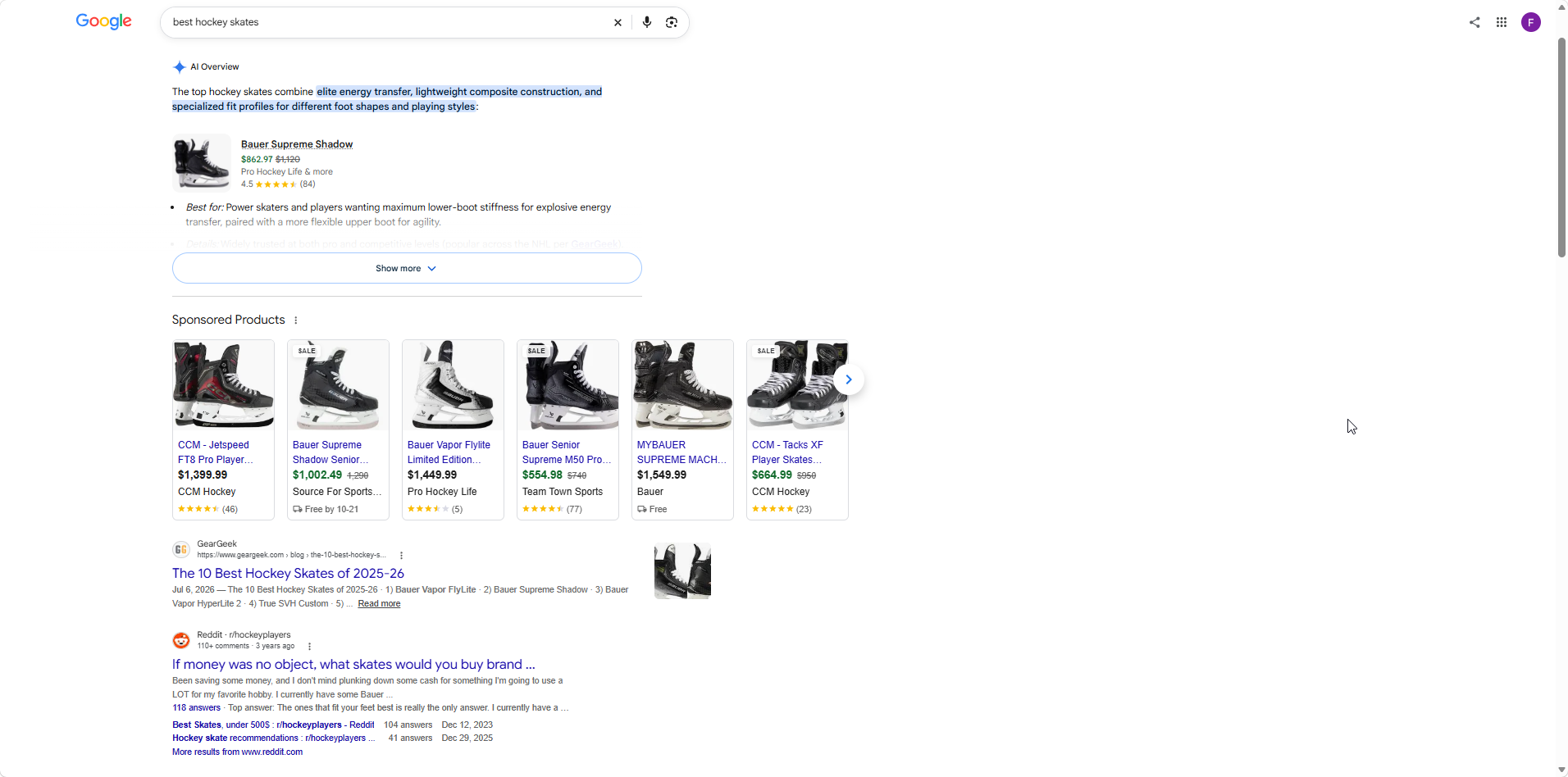
Reddit threads now appear prominently in Google results for a huge range of queries, which has made the platform a magnet for parasite SEO attempts. Communities set their own rules, and most remove self-promotion quickly.
The durable approach is the same one that works with any community: answer questions in existing, already-ranking threads with genuine expertise, disclose your affiliation where it’s relevant, and don’t manufacture posts. Google’s guide to optimizing for generative AI features is blunt that seeking inauthentic “mentions” across the web isn’t as helpful as it might seem.
Parasite SEO on Quora
Quora answers can rank for long-tail questions, but click-through tends to be low and answers can be collapsed or buried. It’s most useful for building visibility on specific questions where you can give the best available answer.
Parasite SEO With Guest Posts
Guest contributions to relevant industry publications are the classic white-hat form of third-party publishing. The site reputation policy explicitly excludes editorial work such as columns and articles. The risk comes when “guest posting” is really paid placement with links that pass ranking credit, which Google treats as link spam.
Parasite SEO With Press Releases
Press release distribution gets announcements indexed quickly, and wire services are explicitly excluded from the site reputation policy. Press releases rarely hold rankings for competitive terms, and links in them should not be keyword-optimized. Treat them as a news channel, not a ranking channel.
Sponsored Posts on News and Magazine Sites
This is where most parasite SEO controversy lives, and where the policy risk is highest. A sponsored post that’s off-topic for the publication, lightly labeled, unauthored, and built to rank for a commercial keyword matches almost every factor Google’s reviewers look for. A disclosed, well-integrated brand story written for the publication’s actual readers is a different product entirely.
Parasite SEO Examples: What Google’s Own Case Studies Tell Operators
Google’s policy page now includes worked examples, which are more useful than any third-party anecdote because they show how reviewers think. Here’s what each one teaches.
Likely Action: The Unauthored CBD Affiliate Article
Google describes a globally recognized business publication hosting an article linking to a CBD marketplace, with no identified author or editor, no commercial disclosure, no connection to any section of the publication, and content duplicated from the marketplace itself. Google says it would likely take action outside the EEA. This is the textbook parasite SEO page, and it fails all four review factors at once.
Unlikely Action: The Integrated Coupons Section
Google describes a publisher running a coupons and deals section with a specialist partner, organized into the publisher’s own categories, linked from the homepage and articles, clearly disclosed as commercial, and with the publisher named as editorially responsible. Google says it’s unlikely to act, even though a third party helps produce it. Integration and accountability made the difference.
Unlikely Action: The Freelancer’s Cooking Section
Google describes a news site’s new cooking section with affiliate links, written by a freelancer who also writes for other outlets, but with content selected specifically for this publication, consistent branding, clear editorial responsibility, and a named author. Google says it’s unlikely to act. Third-party authorship and affiliate links weren’t the problem; lack of integration would have been.
The pattern across all three is consistent: Google doesn’t care who wrote the content or whether it makes money; it cares whether the host genuinely stands behind it.
The Operator’s Parasite SEO Strategy: A Compliant Framework
If you’re going to publish on third-party sites (and most brands should, in some form), here’s the framework we use to keep campaigns on the right side of the policy and worth the investment.
Step 1: Decide What You’re Actually Buying
Third-party publishing can buy four different things: rankings for a specific query, exposure to the host’s audience, authority signals for your brand and authors, or citations in AI answers. Each needs a different host and a different measure of success. Campaigns that try to buy all four at once usually get none of them.
Step 2: Parasite SEO Keyword Research That Matches the Host
Only target queries the host could plausibly own on its own merits. A cybersecurity publication can credibly rank for “how to choose a password manager”; a lifestyle magazine can’t. Matching keyword intent to the host’s genuine topical strength is the single best predictor of whether a placement lasts.
Step 3: Choose Hosts That Offer Real Editorial Integration
Use Google’s four review factors as selection criteria. Will the content appear in the host’s normal design and sections? Will it meet the host’s usual quality bar? Will a named author and editor stand behind it? Will it be unique to this host? If a host offers a “sponsored” subfolder with its own template, no author, and a price list by keyword, walk away.
Step 4: Parasite SEO Content Strategy: Write for the Host’s Audience
The content has to be the best thing the host’s readers could find on the topic, written in the host’s voice, with original insight or data. Google’s AI optimization guide draws a line between commodity content based on common knowledge and non-commodity content offering unique expert or experienced perspectives. Parasite placements are almost always commodity content, which is exactly why they don’t last.
Step 5: Handle Links, Disclosure, and Tracking Correctly
Qualify any paid link with rel=”sponsored” or rel=”nofollow.” Disclose commercial relationships clearly and above the content, following FTC guidance. Use tracked URLs or a dedicated landing page so you can measure referral traffic and conversions, since you won’t have Search Console access to the host’s pages.
Step 6: Measure Off-Site Performance Properly
For platform content, Google now provides a direct view: its July 2026 rollout of platform properties in Search Console lets site owners see how their content on social and video platforms performs on Google Search. For publisher placements, track rankings with a third-party tool, referral sessions in analytics, and branded search growth in your own Search Console.
Step 7: Plan the Exit Before You Enter
Decide in advance what happens if the host removes or demotes the content: where the traffic should go instead, which owned page targets the same query, and what you’ll do with the budget. Operators who build an owned equivalent in parallel lose far less when a placement disappears.
The Host Integration Test: Ten Questions Before You Publish
Run every planned placement through these questions. Three or more “no” answers means the placement carries real policy risk.
- Topical Fit: Does the host already publish substantial content on this topic?
- Section Placement: Will the content live in an existing, linked section of the site?
- Design Consistency: Will it use the host’s standard templates and formatting?
- Named Author: Will a real, identified person be credited as author?
- Editorial Responsibility: Will the host’s editor or team be named as responsible?
- Unique Content: Is the content written only for this host, not syndicated elsewhere?
- Audience Value: Would the host’s regular readers find it useful without the search traffic?
- Clear Disclosure: Is any commercial relationship disclosed clearly and prominently?
- Qualified Links: Are paid or affiliate links marked with rel=”sponsored” or rel=”nofollow”?
- Owned Backup: Do you have an owned page targeting the same need if this one disappears?
The Operator’s Risk Math: Is a Parasite SEO Campaign Worth It?
Almost no parasite SEO guide puts numbers on the decision, so here’s a simple way to do it. The logic is expected value: what you’re likely to earn, adjusted for the chance the placement survives, minus everything it costs.
Expected Return = (Monthly Revenue × Expected Months Live) − Placement Cost − Content Cost − Brand and Compliance Risk
The variable most operators get wrong is “Expected Months Live.” A sponsored page that would pay back in eight months is a bad bet if placements like it typically survive for three. Here’s an illustrative comparison. The figures are hypothetical, chosen only to show how the math changes the decision.
| Scenario | Placement Cost | Monthly Revenue While Ranking | Realistic Months Live | Expected Return Before Brand Risk |
| Unauthored “best of” on an off-topic news site | $8,000 | $4,000 | 2 | $0 |
| Integrated, disclosed contribution on a relevant trade publication | $2,500 (content and outreach) | $1,200 | 18 | $19,100 |
| Owned guide on your site, with digital PR support | $6,000 | $1,500 (after ramp-up) | 24+ | $30,000+ |
The unauthored placement looks attractive on day one and breaks even at best. The integrated contribution and the owned asset both win once survival time is honest. Brand and compliance risk would push the first scenario further negative, and barely touch the other two.
Parasite SEO vs Traditional SEO, Guest Posting, Digital PR, and More
Parasite SEO gets compared with almost every other acquisition channel. Here’s how it stacks up on the dimensions operators actually care about.
| Comparison | Speed to Rank | Durability | Control | Compounding Value to Your Domain | Policy Risk |
| Parasite SEO (Paid Placement) | Fast | Low | Low | None | High |
| Traditional SEO on Owned Media | Slower | High | Full | High | Low |
| Guest Posting (Editorial) | Moderate | Moderate to high | Partial | Moderate | Low |
| Digital PR | Moderate | High | Low | High (earned links and mentions) | Low |
| Programmatic SEO | Moderate | Variable | Full | Variable | Moderate (scaled content abuse if thin) |
Parasite SEO vs Traditional SEO
Traditional SEO builds rankings on a domain you own, so every improvement compounds. Parasite SEO rents rankings on someone else’s domain, so nothing compounds and everything can be revoked. Parasite SEO trades durability for speed, and since 2024 the trade has gotten steadily worse.
Parasite SEO vs Guest Posting
Editorial guest posting and aggressive parasite SEO share a mechanism but differ in intent and integration. A guest post accepted by an editor for its value to readers is editorial work, which Google explicitly excludes from the policy. A paid “guest post” placed to rank is the thing the policy targets.
Parasite SEO vs Digital PR
Digital PR earns coverage and links on third-party sites because journalists find the story worth telling. The content belongs to the publication, the value flows back to your domain through earned links and brand mentions, and it compounds. Parasite SEO buys a page that benefits no one’s domain but the host’s.
Parasite SEO vs Owned Media
Owned media is slower but yours: you control the content, the conversion path, the data, and the future. Most operators who succeed with third-party publishing use it to feed owned assets, not replace them.
Parasite SEO vs Programmatic SEO
Programmatic SEO generates many pages from structured data on your own site. It can work well or fall into scaled content abuse if the pages are thin. Parasite SEO at scale, meaning identical content across many hosts, combines the worst of both: duplication and borrowed authority.
Parasite SEO Alternatives That Compound
Most brands asking about parasite SEO have a real problem: a competitive query they can’t rank for yet. These alternatives solve that problem in ways that build on themselves. Most in-house teams get this far and run out of time to execute all of it at once, which is usually where an agency earns its fee.
Owned Content With Genuine Information Gain
The best long-term answer to “a news site outranks us” is a page on your own site that’s more useful than anything else ranking, with original data, first-hand experience, or tools nobody else offers. A structured SEO content strategy built around information gain is how you win those queries permanently. Our ecommerce SEO case study for a hemp brand shows what that looks like in a vertical where many competitors reach for parasite tactics instead: more than a million clicks earned on an owned domain.
Digital PR and Earned Authority
Earned coverage on relevant publications builds the domain-level signals that make your own new pages rank faster, which is the same benefit parasite SEO borrows, except you keep it. Brand-safe link building and digital PR earns those signals through stories, data, and expertise rather than payments.
Technical Foundations That Let Your Pages Compete
Sometimes a brand can’t rank because of crawl, indexation, or architecture problems, not authority. Fixing those with proper technical SEO and a clear SEO information architecture often closes more of the gap than any third-party placement could.
AI Visibility Built on Real Signals
AI answer engines pull from sources they can trust and verify, and Google’s spam policies now explicitly cover attempts to manipulate generative AI responses. Durable AEO and LLM visibility comes from consistent entity information, authentic third-party mentions, and distinctive content. Our AEO tips for brands that want to get cited by AI search and our breakdown of why websites aren’t being cited by AI tools cover the practical side.
Barnacle SEO for Local and Hospitality Businesses
For local businesses, the legitimate version of borrowed authority is making sure you’re the best result on the platforms that already rank: review sites, booking platforms, maps, and niche directories. Breweries benefit from strong profiles on beer-rating and taproom platforms, and golf clubs from booking and course-review platforms, alongside their own sites. It’s a core part of how we approach craft brewery SEO and golf and leisure SEO.
Which Industries Are Most Tempted by Parasite SEO?
Parasite SEO concentrates in verticals where ranking is hardest and paid advertising is restricted or expensive. Across the industries we work in, four stand out.
Cannabis and Hemp
Ad platform restrictions push cannabis and hemp brands toward organic search, and Google’s own “likely to take action” example is a CBD affiliate article. Brands in this space face both the strongest temptation and the most scrutiny. Our cannabis and hemp SEO work and our cannabis SEO strategy guide focus on platform-safe, owned-domain growth for exactly this reason.
Cybersecurity
“Best VPN,” “best antivirus,” and “best password manager” are some of the most heavily targeted parasite SEO queries on the web, because affiliate payouts are high. Legitimate cybersecurity SEO wins with technical depth and genuine testing, which parasite pages rarely have.
Retail and Ecommerce
Coupons, deals, and “best of” roundups are classic parasite formats, and Google’s policy page uses a coupons section as its example of an integrated partnership done right. Retail and ecommerce SEO that owns product and category searches outlasts any borrowed coupon page.
Data Centres and B2B Technology
B2B brands rarely need aggressive parasite tactics, but third-party thought leadership on LinkedIn and trade publications matters a great deal for pipeline. For data centre SEO, the legitimate version (expert commentary and original research on relevant publications) is a core channel, not a shortcut.
Hiring Parasite SEO Services or a Parasite SEO Agency: What to Ask
If a vendor is offering parasite SEO services, packages, or management, ask these questions before paying anything:
- Which Hosts, Exactly? Ask for the specific domains and sections, then check them against Google’s four review factors yourself.
- Who Is the Named Author? If no one will be credited, the placement fails a review factor before it’s published.
- How Are Links Treated? Any paid link that passes ranking credit violates Google’s link spam policy.
- How Is the Content Disclosed? Ask to see disclosure wording and placement against FTC native advertising guidance.
- Is the Content Unique? Ask whether the same or similar articles are placed on other domains.
- What Happens When It’s Removed? Ask about replacement guarantees, and be skeptical of any plan that moves content to a new subfolder, since Google treats that as circumvention.
A vendor that answers all six honestly is usually selling digital PR or editorial contributions under a different name. A vendor that can’t is selling risk.
How Operators Should Think About Parasite SEO in 2026
Parasite SEO works because Google gives new pages on trusted domains the benefit of the doubt. It fails because Google now looks closely at whether those pages genuinely belong there.
The rules have tightened steadily since 2024: first-party involvement no longer excuses exploitative placements, moving content to new subfolders counts as circumvention, and Google’s reviewers assess presentation, quality, authorship, and duplication. The August 2026 EEA change altered how penalties land, not whether the tactic works.
The operator’s takeaway is practical. Publish on third-party sites when the host’s audience genuinely benefits, when the content is authored, integrated, disclosed, and unique, and when you’d be comfortable with a journalist reading it. Skip paid, unauthored placements built to rank; the math rarely works once survival time is honest. And put most of your effort into owned assets and earned authority, because those are the only rankings you get to keep.
If a competitor’s parasite page is outranking you, the fix is usually a better owned asset, stronger earned authority, and cleaner technical foundations. LYNX SEO builds all three, and our full range of SEO and AEO services covers content, digital PR, technical SEO, and AI visibility under one roof. Talk to the LYNX SEO team about your competitive queries. You get an SEO Director, Strategist, Technical Lead, Designer, and Editor, for less than the cost of a single senior in-house hire.
Related Reading
- Ecommerce SEO Case Study: 1M Clicks for a Hemp Brand
- AEO Tips for Brands to Get Cited by AI Search
- Cannabis SEO Strategy 2026: What Works on Which Platform
Frequently Asked Questions
What Is Parasite SEO in Simple Terms?
Parasite SEO, in simple terms, is publishing content on a well-known, high-authority website instead of your own so the content ranks faster in Google. It works because Google generally assumes new pages on a trusted domain match that domain’s overall quality. Parasite SEO ranges from legitimate guest columns and LinkedIn articles to paid, unauthored placements that Google’s site reputation policy targets.
Is Parasite SEO Against Google Guidelines?
Parasite SEO is against Google guidelines when third-party content is published on a host site mainly because of the host’s established ranking signals, which is what Google’s site reputation policy prohibits. Parasite SEO is not against Google guidelines when the content is genuinely editorial, integrated with the host, clearly authored, and written for the host’s audience. Google’s policy explicitly states that having third-party content alone is not a violation.
Does Parasite SEO Still Work in 2026?
Parasite SEO still works in 2026 in the short term for some placements, because Google’s domain-level quality presumption still gives new pages on trusted sites a head start. Parasite SEO works less reliably than before because Google now uses published review factors, treats moving content to new subfolders as circumvention, and applies manual actions outside the European Economic Area. Inside the EEA, violating pages are separated from the host domain and ranked on their own merits, which removes the advantage over time.
What Is Google Site Reputation Abuse?
Google site reputation abuse is the practice of publishing third-party content on a host website mainly to take advantage of that host’s established ranking signals, so the content ranks better than it could on its own. Google now calls its rule the site reputation policy. It covers content such as sponsored, affiliate, or partner pages that aren’t genuinely integrated with the host, and it excludes editorial work, user-generated content sites, wire services, and properly disclosed native advertising aimed at readers.
What Changed in Google’s Site Reputation Policy in August 2026?
Google’s site reputation policy changed in August 2026 in two ways. First, enforcement now differs by location: from August 30, 2026, manual actions apply to results shown outside the European Economic Area, while inside the EEA violating pages may be categorized as separate from the main domain and ranked independently. Second, Google published four factors its human reviewers weigh: presentation, content quality, authorship, and whether the content appears on other sites.
Can Parasite SEO Hurt My Own Website?
Parasite SEO can hurt your own website indirectly, even though site reputation actions apply to the host rather than to the operator’s domain. Paid links in parasite placements that pass ranking credit violate Google’s link spam policy, brand mentions in low-quality placements can damage reputation, and undisclosed sponsored content can create FTC exposure. The safest approach is to qualify paid links with rel=”sponsored” or rel=”nofollow” and disclose commercial relationships clearly.
What Are the Best Parasite SEO Sites?
The best parasite SEO sites are the ones where your content genuinely fits the platform and its audience, not simply the ones with the highest domain authority. For legitimate third-party publishing, strong options include LinkedIn for professional thought leadership, relevant industry publications for expert contributions, YouTube for tutorials, and existing Reddit or Quora threads where you can give genuinely expert answers. Sponsored posts on off-topic news sites carry the highest risk under Google’s site reputation policy.
Is Parasite SEO on Reddit Safe?
Parasite SEO on Reddit is safe only when it consists of genuine participation that follows each community’s rules, such as expert answers in existing threads with any affiliation disclosed. Reddit communities remove self-promotion quickly, and Google’s AI optimization guidance says seeking inauthentic mentions across the web isn’t as helpful as it might seem. Manufactured Reddit posts designed to rank or influence AI answers carry both platform and search risk.
Do Backlinks From Parasite SEO Placements Help Rankings?
Backlinks from paid parasite SEO placements should not help rankings if they follow Google’s rules, because Google’s link spam policy requires paid links to be qualified with rel=”sponsored” or rel=”nofollow,” which tells Google not to pass ranking credit. Paid placement links that pass ranking credit violate the link spam policy. Editorially earned links from genuine guest contributions or digital PR are a different matter and can support rankings.
What Are the Best Parasite SEO Alternatives?
The best parasite SEO alternatives are owned content with genuine information gain, digital PR that earns links and mentions, technical SEO that removes barriers to ranking, and AI visibility work built on consistent entity signals. For local businesses, barnacle SEO on review, booking, and directory platforms is a legitimate alternative. These parasite SEO alternatives build value on a domain the brand controls, so rankings compound instead of disappearing when a host removes content.
Should I Hire a Parasite SEO Agency?
Hiring a parasite SEO agency is only worth considering if the agency can name the specific host sections, credit a real author, qualify paid links correctly, disclose commercial relationships under FTC guidance, and guarantee content is unique to each host. A parasite SEO agency that can meet those standards is effectively offering editorial contributions or digital PR. An agency that can’t meet them is selling placements that Google’s site reputation and link spam policies target.
Is Parasite SEO Legal?
Parasite SEO is generally legal, since publishing content on another website is not against the law, but parts of some parasite SEO campaigns can create legal exposure. The FTC requires native advertising to be identifiable as advertising and says organic search listings for native ads shouldn’t imply they are anything other than ads. Undisclosed sponsored reviews, misleading claims, and unsubstantiated health claims in parasite content can all raise legal issues, so paid placement programs should be reviewed by counsel.
Sources
- Google Search Central. “Spam policies for Google web search.” 2026. https://developers.google.com/search/docs/essentials/spam-policies
- Google Search Central Blog. “Update to the Site Reputation Policy.” 2026. https://developers.google.com/search/blog/2026/08/update-site-reputation-policy
- Google Search Central Blog. “Updating our site reputation abuse policy.” 2024. https://developers.google.com/search/blog/2024/11/site-reputation-abuse
- Federal Trade Commission. “Native Advertising: A Guide for Businesses.” 2015. https://www.ftc.gov/tips-advice/business-center/guidance/native-advertising-guide-businesses
- Reuters. “Google hit with EU antitrust investigation into its spam policy.” 2025. https://www.reuters.com/world/google-hit-with-eu-antitrust-investigation-into-its-spam-policy-2025-11-13/